What Is a Gold RWA? Real-World Asset Gold Explained


Here's the question people actually mean to ask
Most explainers start with a dictionary definition: RWA stands for Real-World Asset. True, but it doesn't tell you anything useful. The question people are actually asking when they type gold RWA into Google is much simpler than that: if I buy this, do I actually own gold, or do I own a promise about gold? That's the whole thing. Everything else is detail.
So let's answer that question properly, instead of walking through the same five-paragraph glossary entry every other page on this topic uses.
The short version
A gold RWA is a digital token that represents a specific, real claim on physical gold sitting in a vault somewhere. The token is not the gold. It's a receipt. A good one is redeemable, auditable, and tied to gold that actually exists in a specific place, in a specific quantity, under a specific person or company's name. A bad one is just a number on a screen with a nice logo. For a better understanding, you should know more about all the risks and audits associated with Tokenized Gold. That's really it. The interesting part isn't the definition; it's how you tell the difference between the two.
Why gold, of all things, became the test case
It's worth pausing on this because it's not an accident. Out of everything that could have been tokenized first, gold made sense for boring, practical reasons. It's already standardized worldwide; a gram of gold is the same thing in Dubai as it is in Zurich. It already has a vaulting and auditing industry built around it, decades before blockchain existed. And it already solves a problem people actually have: gold is a pain to buy, store, and move in physical form, but people still want the exposure without the hassle.
Tokenizing real estate or private equity runs into messy legal and valuation problems almost immediately. Tokenizing gold mostly just means digitizing paperwork that already existed. That's why it became the proving ground for the whole RWA idea, not because gold is exciting, but because it was the easiest thing to get right.
What actually changes when gold goes on-chain
This is the part most articles skip, and it's the part that matters. Putting gold "on-chain" doesn't change anything about the gold itself. The metal doesn't get lighter, purer, or move any faster. What changes is the paper trail around it.
Normally, if you buy gold through a bank or a bullion dealer, your ownership record lives in that institution's internal database. You trust their statements, their audits, and their word that the gold is really there. With a gold RWA, that ownership record moves to a blockchain instead, which means anyone can check the token supply, trace transfers, and in a well-run setup, cross-reference it against the vault's own audit reports. The record becomes harder to quietly alter and easier to independently check.
What it does not do is remove trust from the equation. People sometimes describe crypto-based assets as trustless, but a gold RWA is trust redirected, not trust removed. You've moved from trusting a bank's internal ledger to trusting a smart contract, an auditor, a custodian, and whoever regulates all three. That can absolutely be a better arrangement. It's just not a magic one.
At the end, it’s not bad to have a glance review of the difference between tokenized and physical gold
Where the trust actually sits, and why it's worth checking
If you take one thing from this, take this: with a gold RWA, the token itself is the easy part to build. Anyone can write smart contract code that mints and burns tokens. The hard part, and the part that separates a real gold RWA from a decorative one, is everything sitting behind the token:
- Is the gold held by a named, licensed custodian, or does it sit somewhere vague?
- Is there an independent audit you can actually read, not just a badge on the homepage?
- Can you redeem the token for physical gold or for cash at a transparent price, and under what conditions?
- Is the platform actually regulated somewhere real, and by whom?
Every legitimate gold RWA has clear, checkable answers to those four questions. Every questionable one gets vague, fast, the moment you ask them.
One detail worth knowing: denomination
A small but telling detail is what unit the token is actually priced in. Some gold-backed tokens are denominated in dollars, meaning you're really buying a dollar-value claim that happens to be gold-backed. Others are denominated directly in grams of gold, meaning the token's value tracks the metal itself rather than a currency wrapped around it. GoldOn, for example, uses gram-denomination for exactly this reason: it keeps the thing you're holding conceptually closer to "gold" than to "a dollar-linked instrument that references gold." It's a small structural choice, but it tells you a lot about how a platform thinks about what it's actually selling you.
The honest takeaway
A gold RWA isn't a new kind of gold, and it isn't a trick. It's an old idea, owning gold without holding it yourself, rebuilt on infrastructure that makes the ownership record more transparent and easier to verify. Whether that's actually true of any specific platform depends entirely on the boring stuff: licensing, custody, audits, and redemption terms. The token is just the wrapper. Before you trust what's inside it, check who's holding the gold, and whether they'll actually let you have it back.
Sources & further reading
- World Gold Council – Gold247, the industry's digital gold infrastructure initiative: gold.org/what-we-do/gold247
- VARA (Dubai Virtual Assets Regulatory Authority) – official regulator site: vara.ae
 Toofan Shaterloo
Building tokenised gold infrastructure for a multipolar world. Board: @HectocornGroup. Prev: Netcore, Dengage. Operator → $300M–$1B. 1x exit. Top 100 UK Tech Influencer. Gold is the hedge.
Related posts
All posts
Toofan ShaterlooMay 28, 2026
How to Invest in Gold?
Investing in gold in 2026 offers diverse methods to hedge against inflation and protect wealth, ranging from traditional physical bars to modern, liquid tokenized gold and ETFs. Because gold provides stability rather than high growth, it is best used as a portfolio diversifier, typically 5% to 15% of your total assets, to reduce risk during economic uncertainty. Choosing the right method depends on your budget and custody preferences, but always prioritize regulated platforms with audited, transparent gold reserves to ensure security.
Toofan ShaterlooJun 1, 2026
Digital Gold Investment Guide
Tokenized gold is a major new development in gold investment since the launch of ETFs in 2003. It allows people to own physical gold through blockchain technology, enabling quick transactions and around-the-clock access. Unlike traditional paper claims, tokenized gold offers clear proof of reserves, providing trustworthy information. This makes it an important tool for modern investors dealing with current global and currency uncertainties.
Toofan ShaterlooJun 3, 2026
What Is Tokenized Gold?
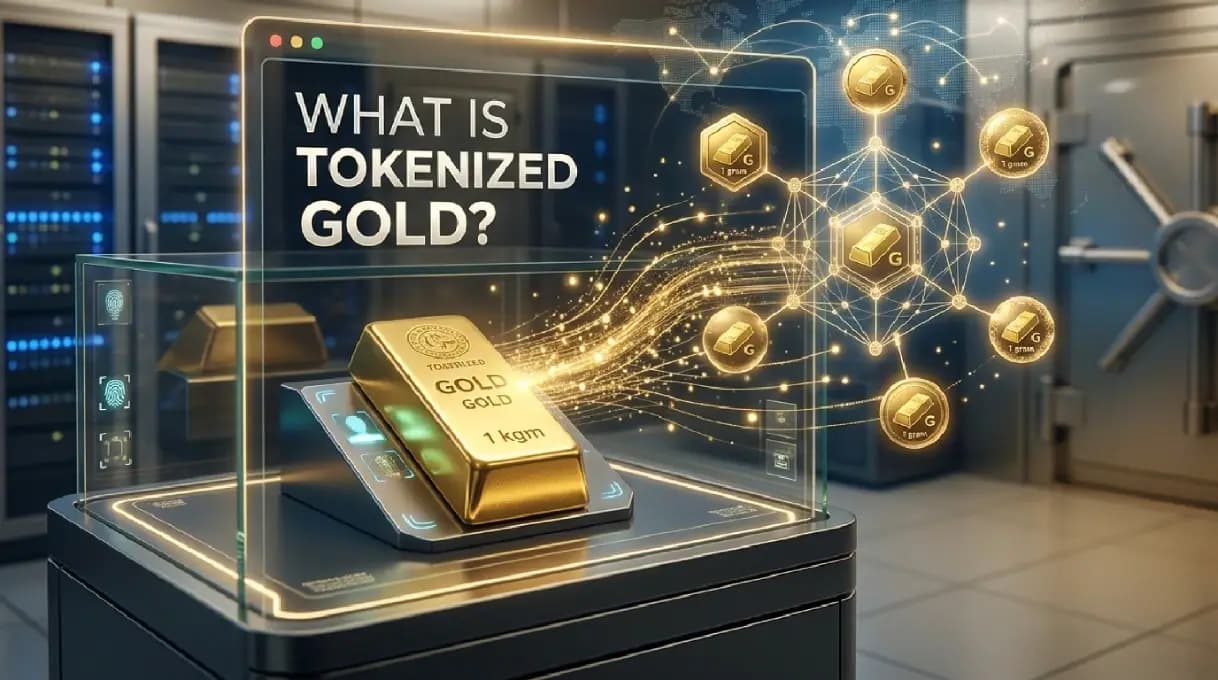
Quick answer: Tokenized gold is a digital token on a blockchain that gives you direct legal ownership of physical gold sitting in a professional vault. When you buy one token, you own a specific, weighed quantity of real metal, not a share in a fund, not a futures contract, not a promise. The token is your proof of ownership. It lives in your wallet, trades around the clock, and can be redeemed for the actual gold if you ever want it.