How to Invest in Gold?


Gold has been a store of value for over 5,000 years, and in 2026, there are more ways to invest in it than ever before. Whether you have $50 or $50,000, whether you prefer holding physical bars or want blockchain-based ownership that earns DeFi yield, gold investing is now accessible to every type of investor.
But with so many options on the table, including physical gold, ETFs, gold mining stocks, gold IRAs, and tokenized gold, it can be a headache to figure out the best way forward. In this guide, I’ll break down each method, compare them honestly, and help you learn how to invest in gold that fits your budget and grows in value to meet your goals.
Gold investing in 2026 is not a one-size-fits-all approach. The best option depends on how much you want to invest, your investment timeline, your risk tolerance, and whether you want to own physical gold or invest based on gold's price. This guide covers them all.
Disclaimer:
Don't forget, this content is provided for educational purposes only and is not financial, investment, or legal advice. All investments, including gold, carry risks, and past performance is not a guarantee of future results. I do not offer individual advice or recommendations, and you should not rely on any information provided here as investment advice. You alone are responsible for your investment decisions, and you should consult a professional before taking any action, rather than relying solely on my general advice, which is based on experience.
What Is Gold Investment And Why Does It Matter?
Gold is a solid way to protect your wealth, not a quick way to get rich. Gold doesn’t pay interest or dividends, as stocks and bonds do. Its value is not in what it is made of, but in the fact that it has long been a reliable place to store wealth. Also, gold is not reliant on any company or government promise. When the financial world is unpredictable, gold helps protect your buying power. It stays strong when other assets are not doing well.
Why is Gold Attracting Attention in 2026?
As of mid-2026, several key factors are keeping gold at the forefront of investment discussions:
- A Shield Against Inflation: When the cost of living rises, and cash loses its buying power, gold historically holds its value. It is a physical asset that cannot be printed or devalued like paper currency.
- A Safe Haven in Uncertain Times: With ongoing global instability affecting the economy, many investors turn to gold for safety. It acts like an emergency fund in the investment world, often doing well when other markets are unstable.
- Major Global Buying: Central banks worldwide are currently stocking up on gold at near-record levels. When the institutions that manage global economies choose to hold gold, it’s a strong signal of its underlying value.
- Modern Accessibility (Tokenization): You no longer have to worry about storing heavy physical bars. New blockchain-based "tokenized gold" allows you to own real, vaulted gold through digital tokens, making it as easy to hold as cryptocurrency while maintaining the stability of a physical asset.
How to Think About It
Most experts view gold as insurance for your portfolio, rather than a growth engine. Because it doesn't move in lockstep with the stock market, adding a small amount, often recommended between 5% and 15% of a total portfolio, can help smooth out volatility and provide peace of mind when times get tough.
5 Ways to Invest in Gold: A Full Comparison
There is no single best way to invest in gold. Each method has a different risk profile, cost structure, minimum investment, and level of convenience. Here is a comprehensive breakdown:
| Method | Liquidity | Custody | Best For | Complexity |
|---|---|---|---|---|
| Physical Gold (coins/bars) | Low–Medium | You hold it | Long-term savers, privacy-focused | Low |
| Gold ETF | High (stock hours) | Fund holds it | Stock investors, portfolio hedging | Low |
| Gold Mining Stocks | High | N/A | Growth investors | Medium |
| Gold IRA | Low (locked) | Custodian | Retirement planning | Medium–High |
| Tokenized Gold | High (24/7) | Vault (audited) | Crypto-native investors, DeFi users | Low–Medium |
Method 1: Physical Gold Bars, Coins, and Bullion
Buying physical gold means owning the metal directly as coins, bars, or jewelry. It is the oldest and most tangible form of gold investment. In the UK, gold Sovereigns and Britannias are CGT-exempt; in the US, American Eagle coins are widely traded.
The main advantages are true ownership, no counterparty risk, and zero platform dependency. The disadvantages are storage costs (typically 0.5–1% per year for insured storage), lower liquidity than financial products, and insurance requirements.
- Best for: investors who want physical possession and are investing $1,000 or more
- Watch out for: dealer premiums (5–15% above spot price) and storage/insurance costs
- Where to buy: established bullion dealers, Royal Mint, US Mint, APMEX
Method 2: Gold ETFs Simple, Low-Cost, Stock Market Access
A gold ETF (Exchange-Traded Fund) is a financial instrument that tracks the price of gold and trades on a stock exchange. The most well-known example is the SPDR Gold Shares (GLD). You buy and sell it like a stock through a brokerage account, during market hours.
Key point: A gold ETF does not give you ownership of physical gold. You own a share of a fund that holds gold on your behalf. This means no storage costs, but also no ability to take physical delivery.
- Best for: stock market investors who want simple portfolio gold exposure
- Watch out for: management fees (GLD charges 0.40% per year), market hours only
- Minimum: as little as $1 with fractional shares on most modern brokerages
Method 3: Gold Mining Stocks- Amplified Exposure
Gold mining stocks are shares in companies that mine and produce gold, such as Barrick Gold (GOLD), Newmont (NEM), or Agnico Eagle. Their share prices are correlated with gold prices, but with amplification: when gold rises 10%, mining stocks may rise 20–30%; when gold falls, they fall harder.
This amplification cuts both ways. Mining stocks also carry company-specific risk: operational problems, political risk in the country of operation, management decisions, and production costs all affect returns independently of the gold price.
- Best for: investors comfortable with equity risk who want leveraged gold exposure
- Watch out for: mining stocks are not a 'safe haven' in the way gold itself is
Method 4: Gold IRAs Tax-Advantaged Retirement Gold
A Gold IRA is a self-directed Individual Retirement Account (IRA) that holds physical gold instead of stocks and bonds. Contributions may be tax-deductible (Traditional IRA) or grow tax-free (Roth IRA). The gold must be IRS-approved purity (99.5%+ for bars) and stored with an approved custodian.
ALERT
Gold IRA providers usually charge several fees (from the Gold IRA minimum investment). You can expect to pay a setup fee ranging from $50 to $200, annual custody fees between $100 and $300, and storage fees. Always read the full fee schedule before you open an account. Some providers advertise ‘free storage’ but incorporate costs in their product spreads.
Method 5: Tokenized Gold: The Modern Way to Invest in Digital Gold Online
Tokenized gold is the fastest-growing segment of the gold investment market. It combines the security and stability of physical gold with the accessibility, liquidity, and programmability of blockchain technology.
When you invest in tokenized gold, you purchase a digital token that typically represents 1 troy ounce (XAUt, PAXG) or 1 gram (KAU, DigiGold) of physical gold stored in an audited, insured vault. Your ownership is recorded on a blockchain, giving you:
- True ownership: Each token represents a specific quantity of gold in a real vault
- 24/7 liquidity: trade your tokens any time, unlike stock market hours
- Low minimum starts from as little as $1 worth of gold
- DeFi compatibility uses tokenized gold as collateral and earns yield in DeFi protocols
- Global access, no geographic restrictions, no dealer markup, instant settlement
While tokenized gold has already revolutionized the market, our upcoming platform is set to change the game entirely. We are building more than just a place to buy gold tokens; we are creating a seamless bridge between traditional wealth preservation and the efficiency of modern finance.
Ready to be the first to experience the new standard of gold ownership? Visit GoldON.io to learn more and join the waitlist.
How to Invest in Gold Online: Step-by-Step Guide
The following steps apply whether you are buying a gold ETF, physical gold, or tokenized gold. We will highlight where the process differs by method.
Step 1: Define Your Investment Goal
Before buying any gold, decide what you are trying to achieve. Are you hedging against inflation? Building a long-term store of value? Looking for a portfolio diversifier? Your goal determines your method.
- Wealth preservation-Physical gold or tokenized gold
- Portfolio hedging-Gold ETF
- High growth potential- Gold mining stocks
- Retirement planning - Gold IRA
- Digital investment with yield potential -Tokenized gold (DeFi)
Step 2: Choose the Right Method for Your Budget
Your starting budget has a significant impact on which gold investment method is accessible to you:
| Budget | Recommended Method | Why |
|---|---|---|
| Under $100 | Tokenized gold or fractional ETF | Low minimums, full gold exposure, instant liquidity |
| $100 – $1,000 | Tokenized gold or gold ETF | More flexibility; tokenized gold gives real ownership |
| $1,000 – $10,000 | Physical gold + tokenized gold | Diversify between tangible and digital ownership |
| $10,000+ | Physical gold + ETF + mining stocks | Full diversification across all gold asset classes |
Step 3: Choose a Regulated Platform
Always use a regulated, audited platform. For tokenized gold specifically, check that the platform:
- Holds gold in a fully audited, insured vault (third-party audit reports should be public)
- Is licensed by a recognized financial regulator (VARA, FCA, NYDFS, MAS)
- Publishes proof-of-reserves data
- Has transparent redemption terms. Can you take physical delivery? At what threshold?
Step 4: Complete Account Verification (KYC)
Regulated gold investment platforms require identity verification (KYC, Know Your Customer) before you can trade. This typically takes 5–15 minutes and requires a government-issued ID and a selfie. For gold ETFs purchased through a stock brokerage, the brokerage completes this process.
Step 5: Fund Your Account and Make Your First Purchase
For tokenized gold platforms, deposit fiat currency (USD, EUR, AED) or supported cryptocurrency. For gold ETFs, transfer funds to your brokerage. For physical gold, complete a purchase through a bullion dealer. Always start with an amount you are comfortable holding for the long term. Gold is not a short-term trading vehicle.
Step 6: Secure Your Investment
Physical gold needs insured storage. Tokenized gold held on a platform should ideally be transferred to your own hardware wallet for self-custody if you are investing significant amounts. Your brokerage holds gold ETFs; ensure you use a regulated, deposit-insured broker.
KEY TAKEAWAY:
The first and most important step in gold investing is choosing a regulated platform with audited, transparent gold reserves. One decision will save you from the most common gold investment scams and failures
Gold Investment Risks: What Every Investor Needs to Know
Gold is considered a low-risk, safe-haven asset, but that does not mean it is risk-free. Understanding these risks helps you invest intelligently:
1. Price Volatility
Gold's price is quoted in USD and moves in response to macroeconomic factors such as the strength of the US dollar, Federal Reserve interest rate decisions, geopolitical events, and central bank activity. Gold can decline by 15–20% during periods when real interest rates rise significantly (as in 2022).
2. No Income Generation
Unlike stocks, gold pays no dividends. Unlike bonds, it pays no interest. Your return comes entirely from price appreciation. This means gold is most effective as a portfolio diversifier rather than a primary income-generating investment. The exception: some DeFi protocols accept tokenized gold as collateral and pay yield on it.
3. Counterparty Risk (Tokenized & ETF Gold)
When you hold a gold ETF or tokenized gold, you are relying on a third party to custody the physical gold correctly. This introduces counterparty risk, the risk that the platform or fund fails to honor its obligations. Mitigate this by choosing regulated platforms that conduct regular third-party audits and maintain proof of reserves.
4. Storage and Insurance Risk (Physical Gold)
Physical gold can be stolen, lost, or damaged. If you store it at home, it may not be covered by standard home insurance policies. Professional vault storage removes this risk but adds ongoing cost (typically 0.5–1% annually).
How to Start Investing in Gold Today
Gold has never been easier to invest in (as financial experts say, every move in this industry carries risk, so "easy" doesn't mean no risk). Whether you like holding it in your hands, buying through the stock market, or exploring new digital options, there’s a method that fits your style. Here’s what you need to know to make confident decisions:
1. Stick with trusted platforms.
Always use regulated and licensed providers. Double-check their credentials with the official regulator. This protects you from scams and ensures your gold is real.
2. Think long term.
Gold is a steady investment. Start with an amount you’re comfortable leaving untouched for at least 3-5 years. Short-term swings can be stressful, but don’t let them scare you.
3. Don’t put all your eggs in one basket.
If you’re investing more than $10,000, consider spreading your money across different ways of owning gold, such as physical bars, ETFs, or digital gold. Diversifying can help reduce risk.
4. Know the fees.
Storage, management, and buying/selling spreads can add up over time. Understand all costs before you commit; it can make a big difference to your returns.
5. For digital or tokenized gold: verify it’s important!
Check for proof-of-reserves and audit reports. Make sure every digital token you buy is backed by actual gold.
With the above steps, you can make smart decisions that protect and grow your money.
 Toofan Shaterloo
Building tokenised gold infrastructure for a multipolar world. Board: @HectocornGroup. Prev: Netcore, Dengage. Operator → $300M–$1B. 1x exit. Top 100 UK Tech Influencer. Gold is the hedge.
Related posts
All posts
Toofan ShaterlooJun 1, 2026
Digital Gold Investment Guide
Tokenized gold is a major new development in gold investment since the launch of ETFs in 2003. It allows people to own physical gold through blockchain technology, enabling quick transactions and around-the-clock access. Unlike traditional paper claims, tokenized gold offers clear proof of reserves, providing trustworthy information. This makes it an important tool for modern investors dealing with current global and currency uncertainties.
Toofan ShaterlooJun 3, 2026
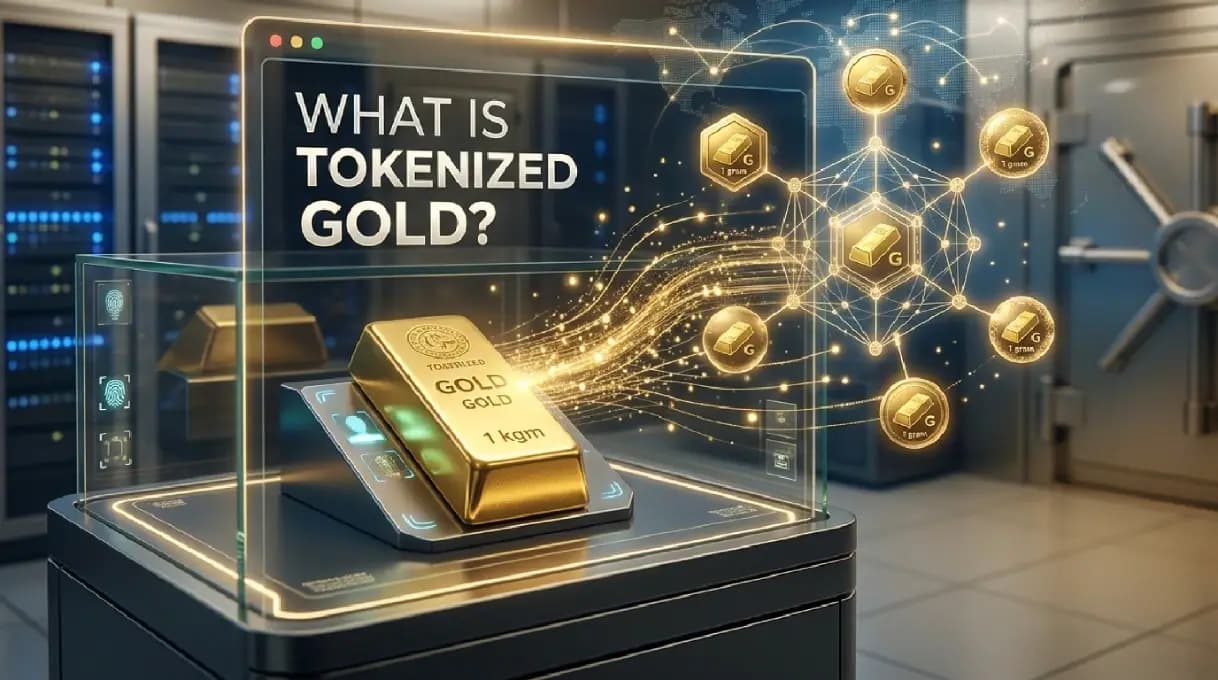
What Is Tokenized Gold?
Quick answer: Tokenized gold is a digital token on a blockchain that gives you direct legal ownership of physical gold sitting in a professional vault. When you buy one token, you own a specific, weighed quantity of real metal, not a share in a fund, not a futures contract, not a promise. The token is your proof of ownership. It lives in your wallet, trades around the clock, and can be redeemed for the actual gold if you ever want it.
Toofan ShaterlooJun 8, 2026
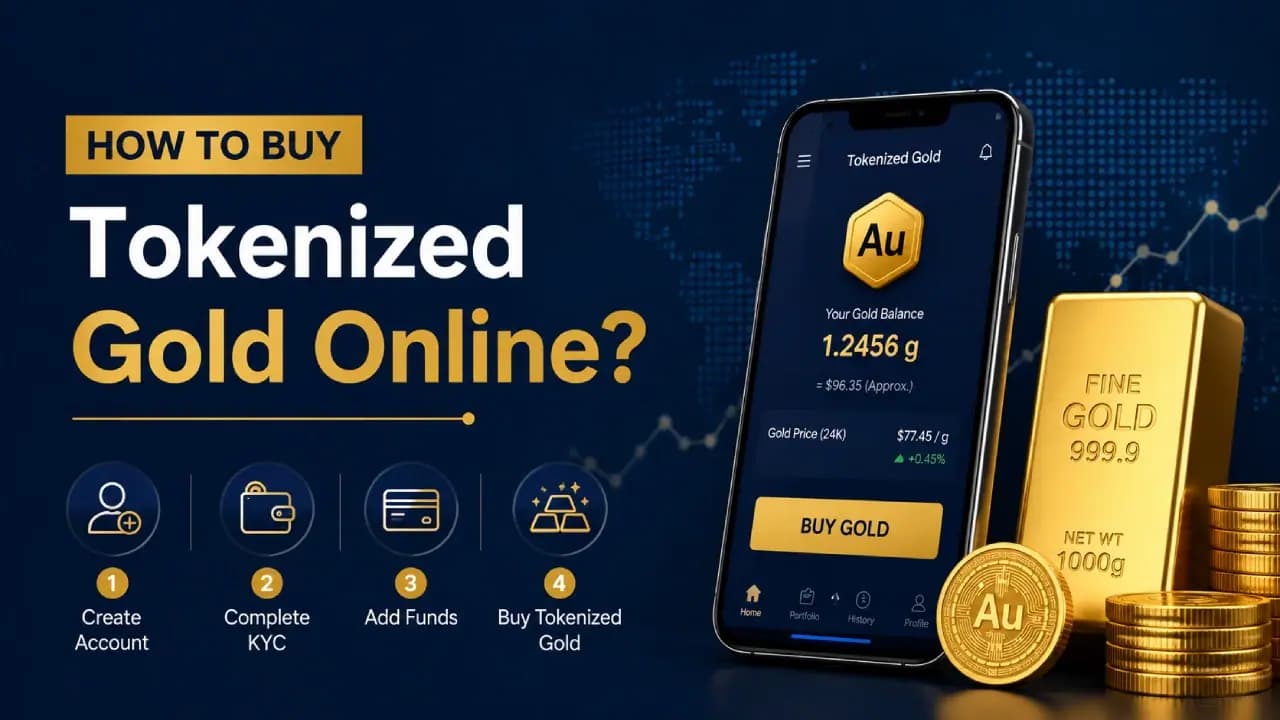
How To Buy Tokenized Gold Online?
To buy tokenized gold online: choose a regulated platform (PAXG, XAUT, or a gram-based provider like GoldOn) → create an account → complete KYC → fund via bank transfer or card → buy in any amount from under $10. Each token represents real, vaulted gold with instant settlement and 24/7 trading , at a fraction of the cost of physical gold or ETFs.