Tokenized Gold vs Physical Gold

Gold just had its biggest macro moment in half a century. The gold spot price hit an all-time high of $5,589 per troy ounce on January 28, 2026, and as of June 2026, it trades near $4,165 per troy ounce, still 23% higher than a year ago. J.P. Morgan projects it could average $6,000/oz by Q4 2026.
Meanwhile, a parallel revolution is happening on-chain. Tokenized gold trading volume in Q1 2026 alone hit $90.7 billion, surpassing the entire $84.6 billion traded across all of 2025. The tokenized gold market cap crossed $6 billion in February 2026.
So which one should you own? Most comparisons give you a surface-level answer. This article goes deeper, covering the angles most investors never consider: tax traps, DeFi yield potential, redemption walls, inheritance complexity, and the hidden costs buried in both sides. Let's be precise.
DISCLAIMER
This article is for informational and educational purposes only. It does not constitute financial, legal, tax, or investment advice. All data sourced from publicly available 2026 reports. Always consult a qualified financial advisor before making investment decisions. Past performance of gold prices does not guarantee future results.
How They Actually Work (The Part Most Guides Skip)
Physical Gold: Ownership You Can Touch
When you buy a physical gold bar or gold coin, you own a tangible asset with zero counterparty risk if you hold it yourself. No company needs to stay solvent for your wealth to survive. You can put it in a home safe, a bank safe deposit box ($150–$400/year), or a private vault (0.5%–1.0% annually for insured, segregated storage). When you want to sell, any dealer publishes a buy-back spread, typically within 1–2% of spot (Finextra).
At current spot prices near $4,165/oz, a dealer markup of $170 works out to roughly 4.1%, actually one of the lowest percentage entry costs in years, because higher spot prices compress the relative premium.
Tokenized Gold: Blockchain Ownership of Real Bullion
A tokenized gold token, such as PAX Gold (PAXG) or Tether Gold (XAUT), is an ERC-20 token on the Ethereum blockchain, with each token representing exactly one troy ounce of LBMA-standard physical gold held in an audited vault. PAXG stores gold in Brink's London vaults, regulated by the New York Department of Financial Services (NYDFS). XAUT stores gold in Swiss vaults under TG Commodities Limited.
Together, PAXG and XAUT control over 96% of the tokenized gold market (CoinGecko / Yahoo Finance). As of March 2026, XAUT traded at approximately $4,365 per token, closely mirroring the spot price (Canadian Mining Report).
The Real Comparison: Factor-by-Factor Breakdown
Here is what the data actually shows when you compare them side by side:
| Factor | Physical Gold | Tokenized Gold | Verdict |
|---|---|---|---|
| Minimum Buy | ~1g ($130+) | Fractional (any $) | Tokenized wins |
| Storage Cost | 0.5%–1.0%/yr | 0.15%–0.25%/yr | Tokenized wins |
| Trading Hours | Market hours | 24/7/365 | Tokenized wins |
| Liquidity | T+1 or T+2 | Near-instant | Tokenized wins |
| US Cap Gains Tax | 28% (collectible) | Varies by jurisdiction | Physical disadvantage |
| Counterparty Risk | Zero (self-custody) | Issuer + smart contract | Physical wins |
| Physical Seizure Risk | Possible | None (on-chain) | Tokenized wins |
| Portability | Very difficult | Instant, borderless | Tokenized wins |
| DeFi / Yield Use | Impossible | 2%–10% APY | Tokenized wins |
| Redemption Floor | None | 430 oz ($1.9M+) | Physical wins (small holders) |
| System-Down Risk | None | Blockchain/issuer risk | Physical wins |
| Generational Transfer | Complex probate | Wallet key transfer | Tokenized wins (if keys are safe) |
Sources: Finextra 2026, CoinGecko RWA Report 2026, SmartAsset 2026
Hidden Costs Nobody Tells You About
The Physical Gold Cost Stack
What You Actually Pay for Physical Gold:
- Dealer premium: ~3.9%–6% above spot, depending on market conditions
- Storage: 0.5%–1.0% annually at institutional vaults (or $150–$400/yr at bank)
- Insurance: Often separate; home gold may not be covered by standard homeowner policies
- Counterfeit risk: Real, especially from less-reputable dealers; verification costs extra
- Sell-back spread: Typically 1–2% below spot, competitive but not instant
- US capital gains tax: 28% maximum rate (IRS collectibles category) vs 20% for stocks (SmartAsset 2026)
That US 28% collectibles tax rate on physical gold is one of the most overlooked investor traps. The IRS treats gold bars, coins, and even gold ETFs that hold physical bullion as collectibles, meaning your long-term gains are taxed at a maximum 28%, not the 15–20% most investors expect from equity gains (SmartAsset). The federal estate tax exemption is also set to decrease to approximately $7 million per individual in 2026, down from nearly $14 million, making estate planning around physical gold far more complex (American Bullion).
The Tokenized Gold Cost Stack
What You Actually Pay With Tokenized Gold:
- Paxos (PAXG): 0.02% on-chain transaction fee + ~0.15% creation/redemption fee
- Tether (XAUT): ~0.25% annual storage/management fee embedded in token economics
- Exchange fees: Standard trading fees on Binance, Kraken, Coinbase, and similar platforms.
- Gas fees: Ethereum network fees (vary; often $2–$15 per transaction)
- Redemption wall: 430 tokens ($1.9M+) minimum to redeem for physical bar — institutional only
- Smart contract risk: No fee, but a structural risk to understand
The redemption floor is a critical detail: to actually receive physical gold from PAXG or XAUT, you need a minimum of 430 tokens, worth approximately $1.9 million at current prices. Below that threshold, your exit is to sell back into the market at the issuer's quoted price. This creates a highly opaque liquidation spread for retail holders (Finextra).
The DeFi Yield Angle: Gold That Actually Earns
This is what most physical gold investors completely miss. In 2026, tokenized gold is no longer a passive store of value sitting in a vault. It has become a productive financial asset:
- Aave & Compound: Deposit PAXG as collateral, borrow stablecoins at 2–6% APY, maintaining gold exposure without selling
- Uniswap / Curve liquidity pools: Provide PAXG/USDC or XAUT liquidity and earn 3–10% from trading fees
- Kinesis Gold (KAU): Pays 2–5% annually from network transaction fees — a tokenized gold token that actually yields income
- Matrixdock Gold (XAUM): DeFi-deployed value grew over 1,500% in Q1 2026 (CEX.IO Q1 Report)
In Q1 2026, the value of tokenized gold deployed in DeFi jumped 123% quarter-over-quarter (CEX.IO). Physical gold earns zero income. It can not be deposited on Aave. It can not be used as on-chain collateral. It simply sits.
That said, DeFi yield comes with real risks: smart contract vulnerabilities, protocol insolvency, impermanent loss in liquidity pools, and oracle failures. These risks do not apply to physical gold held in your own safe. Only use DeFi strategies if you understand the protocols (BeInCrypto).
The Questions Investors Actually Search
Is tokenized gold as safe as physical gold?
It depends on what kind of risk you mean. Physical gold has zero counterparty risk if you self-custody. No company needs to exist. Tokenized gold requires trusting: (1) the issuer's solvency, (2) the vault custodian, (3) the smart contract code, and (4) the regulatory framework. PAXG has monthly KPMG attestations and NYDFS regulation. XAUT has Swiss vault storage and BDO attestations, but less conventional regulatory oversight in the EU under MiCA (CoinPaprika). The question is not which is safer; it is which risks you can manage.
Can tokenized gold replace physical gold?
Not entirely. Physical gold cannot be hacked, delisted, or frozen. If global internet infrastructure or blockchain infrastructure collapses, however unlikely, your gold bar in a vault still exists. For true systemic risk hedging and generational wealth transfer without digital keys, physical gold remains irreplaceable. For everything else, liquidity, fractional access, DeFi yield, 24/7 trading, instant cross-border transfer, tokenized gold wins on nearly every metric.
Is tokenized gold halal / Shariah compliant?
This is one of the most-searched questions from MENA investors. Platforms like Comtech Gold (CGO) explicitly market a Shariah-compliant tokenized gold structure, with each token backed by allocated physical gold, meeting the Islamic finance principle of "qabd" (actual possession). GoldOn (goldon.io), operating under the UAE's VARA licensing framework, also positions its tokenized gold as Shariah-aligned, with a gram-denomination model and a partnership with Lotus Gold for physical backing. Always verify Shariah certification independently through a qualified scholar.
How do I pass tokenized gold to my heirs?
Inheritance planning is where tokenized gold introduces unexpected complexity. If you hold PAXG or XAUT in a self-custody wallet and your heirs do not have the private key, the gold is lost forever. Unlike physical gold, which goes through estate probate and has a documented step-up in cost basis to fair market value at death (reducing heirs' capital gains), tokenized gold wallet keys must be formally included in estate planning. On the flip side, tokenized gold avoids probate entirely if wallet access is properly documented (Estate Mentors).
The 2026 Regulatory Map: Where Tokenized Gold Is (And Isn't) Legal
Tokenized Gold Regulation in Key Markets (2026):
- USA: SEC guidance on tokenized securities in 2026 is accelerating institutional adoption; PAXG benefits from NYDFS licensing
- UAE (Dubai): VARA-licensed platforms like GoldOn are operating under a clear digital asset framework in the MENA's most crypto-progressive market
- EU: MiCA (Markets in Crypto-Assets) regulation now requires ART issuers to hold EU authorization; XAUT has not publicly confirmed compliance as of March 2026
- India: IFSCA framework in GIFT City creates a regulatory path for tokenized gold platforms
- Singapore: MAS regulations are making tokenized gold more accessible with each update
- Physical gold: Legal everywhere, but cross-border movement requires customs declarations, import duties (India: 15% duty in 2026), and potential seizure risk
Regulatory clarity is one of the primary drivers behind tokenized gold's 5.5x growth outperformance vs physical gold in Q1 2026 (CEX.IO Q1 2026 Report). As frameworks solidify, institutional capital is moving on-chain.
So Who Should Own What? A Practical Framework
The real practical framework breaks down to the following bullet points:
Physical Gold Is Right For You If:
- You want zero counterparty risk and don't trust any institution
- You are building multi-generational wealth and have a proper estate plan in place
- You live in a high-inflation or currency-collapse scenario where physical possession matters most
- You are a US taxpayer with a long holding horizon and already in a low bracket (the 28% collectibles rate hurts most in high brackets)
- You want a system-down hedge against technology or financial infrastructure failure
Tokenized Gold Is Right For You If:
- You want fractional exposure, even $50 of gold, without physical minimums
- You trade actively and need 24/7 liquidity and instant settlement
- You are a DeFi user looking for gold-backed collateral to earn yield
- You live in the MENA region or the UAE, where VARA-licensed platforms like GoldOn offer regulated access
- You want to move value across borders instantly without customs, insurance, or transit risk
- You prioritize lower ongoing fees (0.15–0.25%) over the 0.5–1.0% of professional physical vaulting
The Angle Every Investor Misses: They're Not Competing
The most common mistake in the tokenized gold vs physical gold debate is treating it as a binary choice. The most sophisticated gold investment strategy in 2026 uses both:
- Physical gold: 5–15% of portfolio as ultimate systemic hedge. Held in a private vault. Documented in your estate plan.
- Tokenized gold (PAXG/XAUT, GoldOn): For active liquidity needs, cross-border transfers, and DeFi yield strategies.
- Platform-native tokens (GoldOn): For MENA/Gulf investors who want VARA-regulated, gram-denominated access with built-in Shariah compliance.
As JPMorgan's institutional collateral networks move gold on-chain and Wintermute launched institutional OTC trading for gold-backed tokens this year, it is clear that the distinction between "digital" and "physical" gold is narrowing. The real-world asset (RWA) tokenization market could surpass $500 billion by the end of 2026 (Crypto Briefing), and gold is one of its primary drivers.
Bottom Line
Physical gold is the ultimate counterparty-free store of value. Tokenized gold is the ultimate liquid, programmable, 24/7 version of that same value. What investors miss in 2026 is not the difference; it is that the smartest gold investment strategy uses both, in proportions aligned with your risk profile, geography, tax situation, and financial goals.
With gold near multi-decade highs, a $6 billion tokenized gold market growing five times faster than the physical market, and platforms like GoldOn making VARA-licensed gram-denomination tokenized gold accessible across the MENA region, this is the year to stop thinking of them as rivals and start building a strategy that leverages both.
 Toofan Shaterloo
Building tokenised gold infrastructure for a multipolar world. Board: @HectocornGroup. Prev: Netcore, Dengage. Operator → $300M–$1B. 1x exit. Top 100 UK Tech Influencer. Gold is the hedge.
Related posts
All posts
Toofan ShaterlooMay 28, 2026
How to Invest in Gold?
Investing in gold in 2026 offers diverse methods to hedge against inflation and protect wealth, ranging from traditional physical bars to modern, liquid tokenized gold and ETFs. Because gold provides stability rather than high growth, it is best used as a portfolio diversifier, typically 5% to 15% of your total assets, to reduce risk during economic uncertainty. Choosing the right method depends on your budget and custody preferences, but always prioritize regulated platforms with audited, transparent gold reserves to ensure security.

Toofan ShaterlooJun 1, 2026
Digital Gold Investment Guide
Tokenized gold is a major new development in gold investment since the launch of ETFs in 2003. It allows people to own physical gold through blockchain technology, enabling quick transactions and around-the-clock access. Unlike traditional paper claims, tokenized gold offers clear proof of reserves, providing trustworthy information. This makes it an important tool for modern investors dealing with current global and currency uncertainties.
Toofan ShaterlooJun 3, 2026
What Is Tokenized Gold?
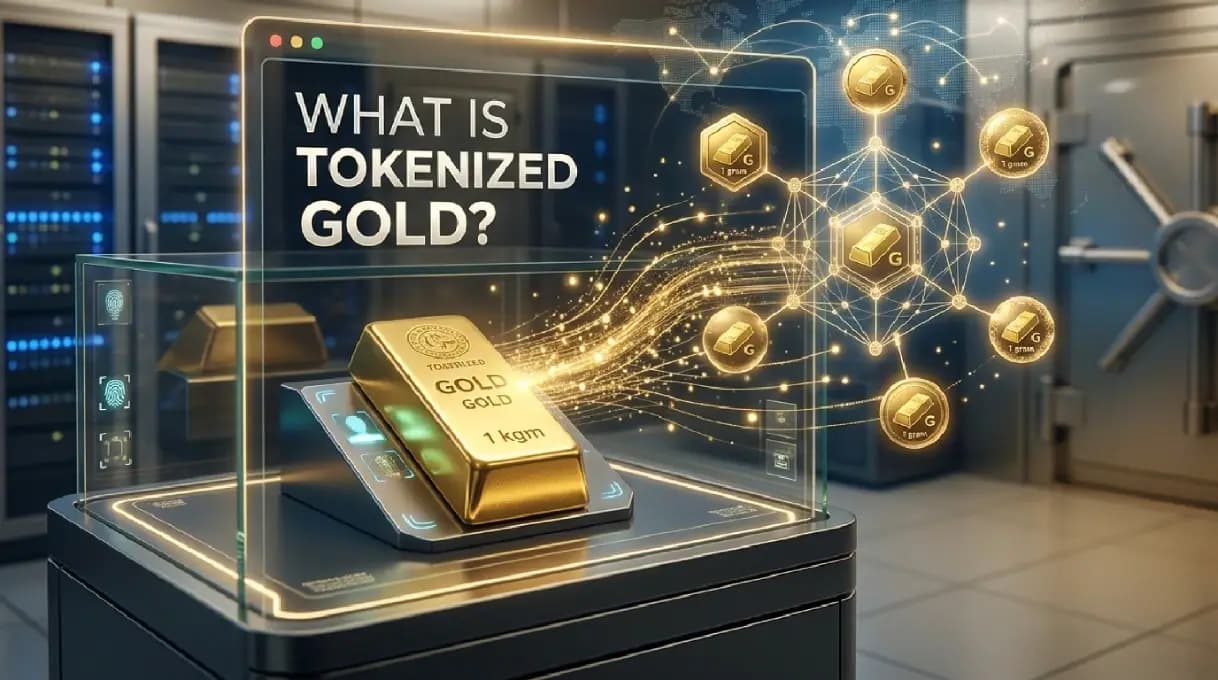
Quick answer: Tokenized gold is a digital token on a blockchain that gives you direct legal ownership of physical gold sitting in a professional vault. When you buy one token, you own a specific, weighed quantity of real metal, not a share in a fund, not a futures contract, not a promise. The token is your proof of ownership. It lives in your wallet, trades around the clock, and can be redeemed for the actual gold if you ever want it.