How To Buy Tokenized Gold Online?

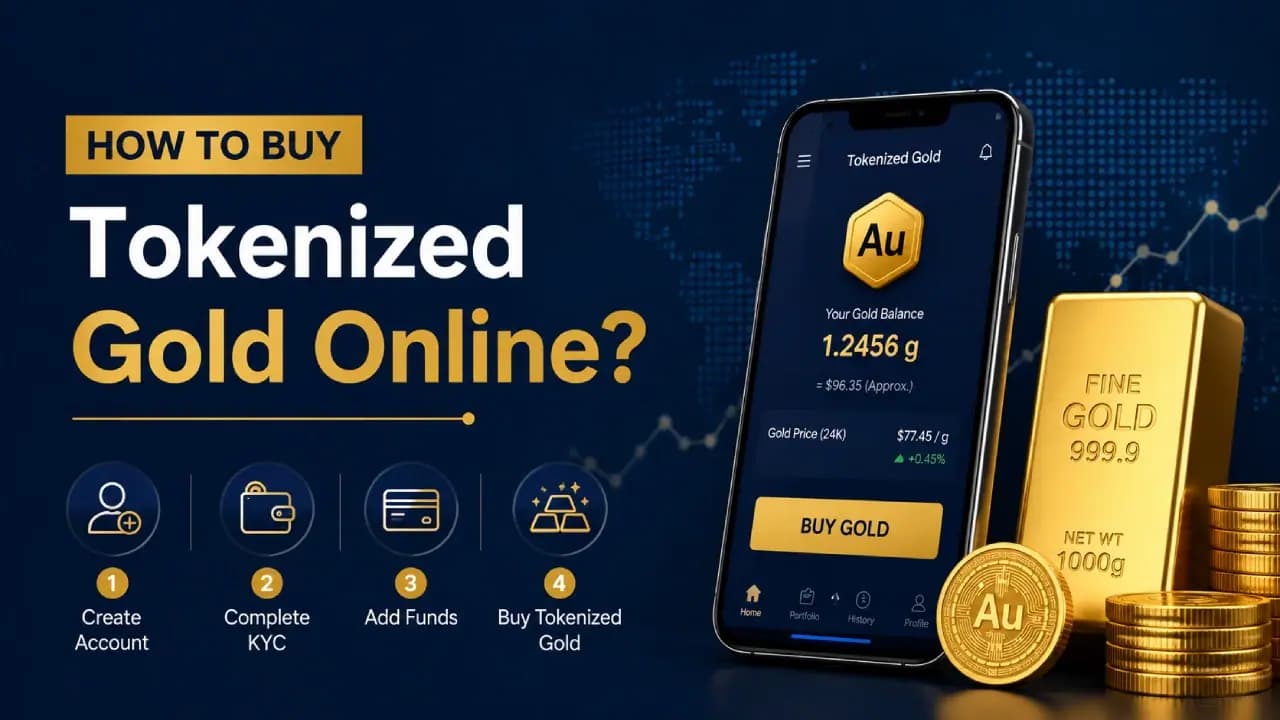
Gold just hit $5,589/oz in January 2026, its highest price ever. And yet, most people are still buying it the old way: You can invest in gold or silver without paying management fees or dealing with markups and delivery issues. Tokenized gold makes this easier. You can own real gold or silver that is safely stored. You can trade it any time, 24/7, in small amounts starting at 0.001 ounces using blockchain technology.
This guide is not going to tell you that tokenized gold is the future. It already is the present: $5.9 billion in market capitalization, $178 billion in annual trading volume, and growing. What it will tell you is how to actually buy it, what to look for, and what can go wrong.
Quick answer: Choose a platform (PAXG, XAUT, KAU, or a regional provider like GoldOn) → create an account → complete KYC → fund it → buy. Done. The sections below fill in the gaps that actually matter.
The Numbers Speak for Themselves
The chart below shows the tokenized gold market capitalization (bars) against the gold spot price (line) from 2019 to 2026. The correlation is real, but notice that market cap growth consistently outpaces gold price growth. That gap is adoption, not price exposure.
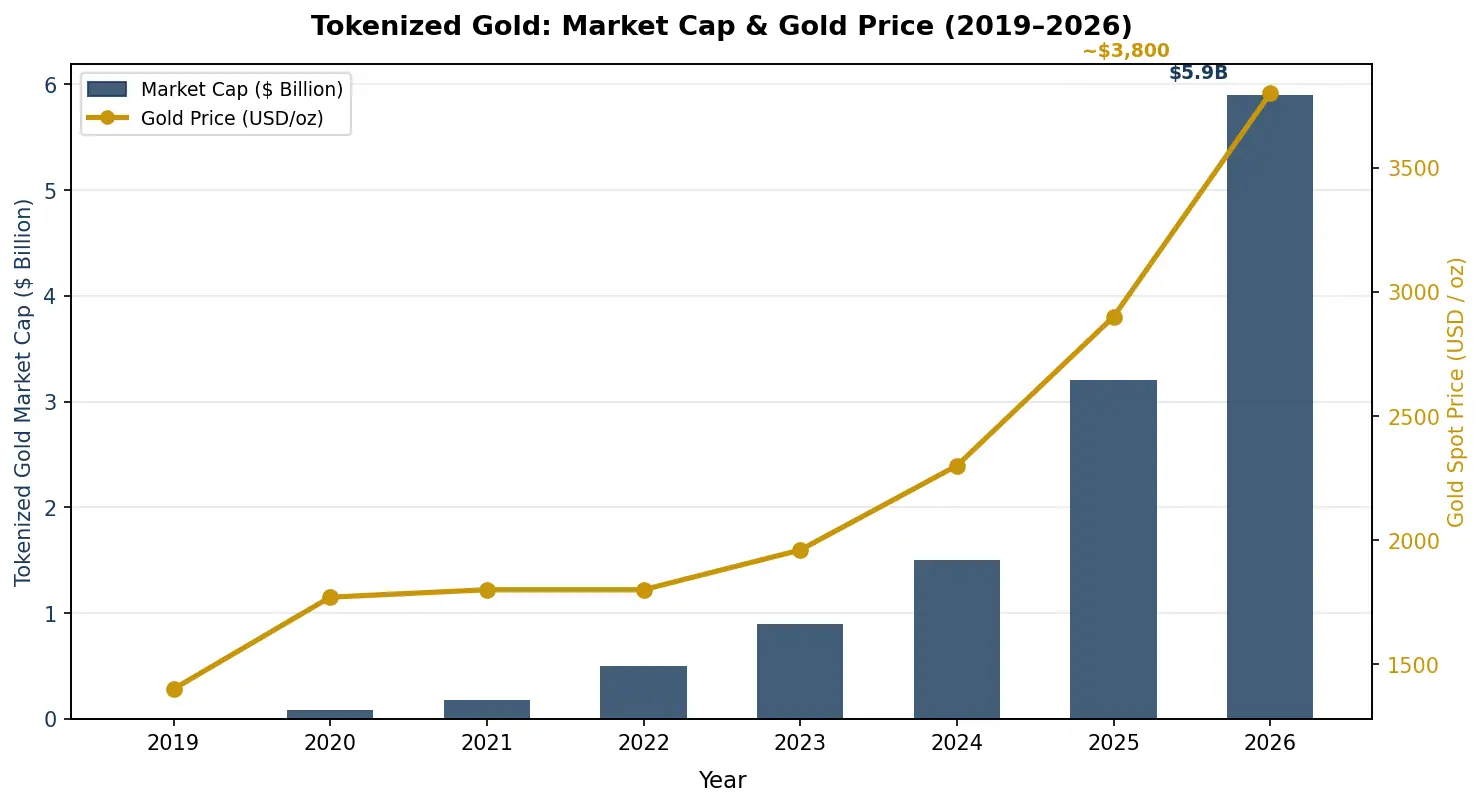
Sources: Commodara (market cap), LiteFinance / World Gold Council (gold price). 2026 values are mid-year estimates.
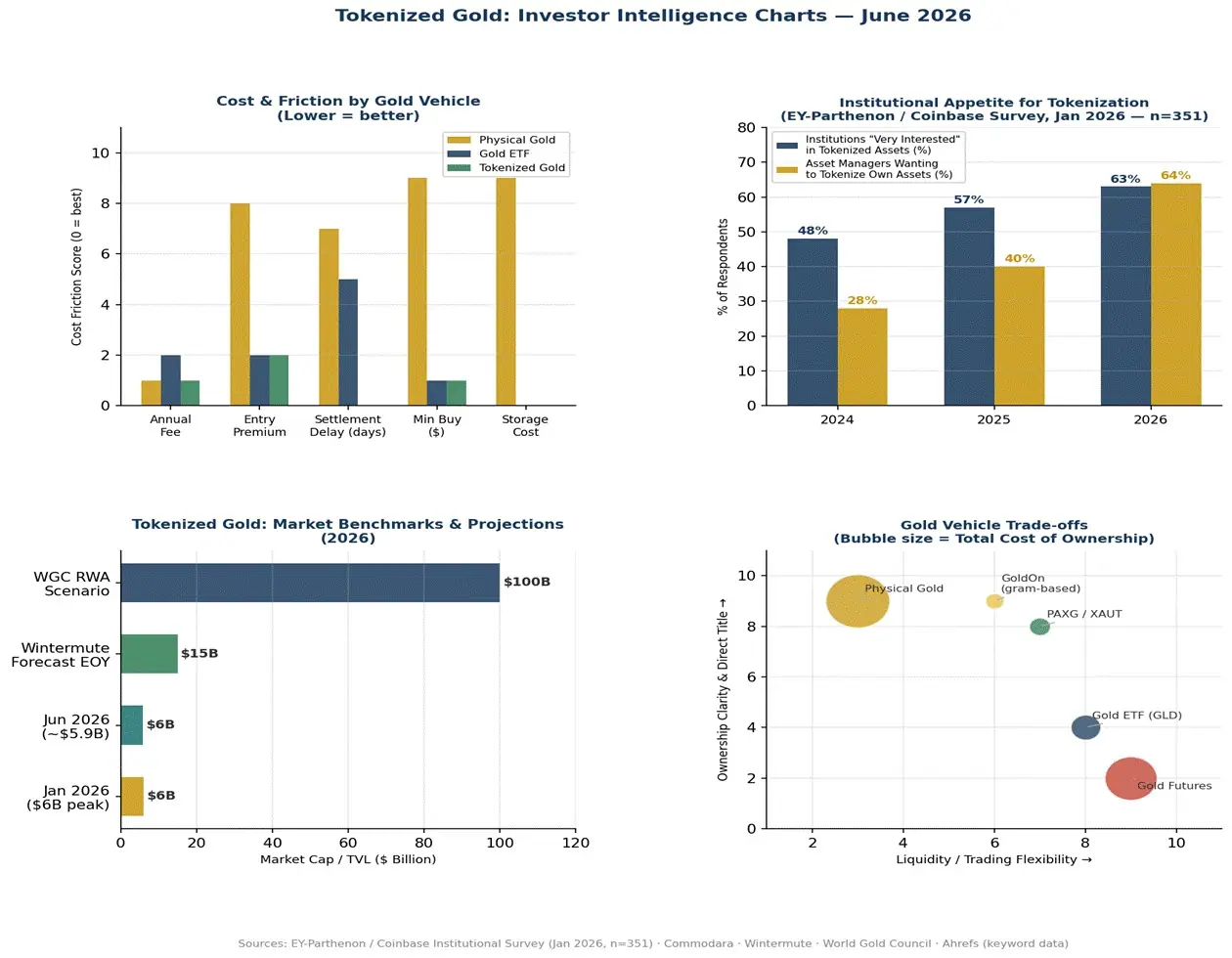
The chart below combines four separate data angles into a single view. Each panel answers a different investor question, not the same data sliced in different ways, but genuinely distinct lenses on the same asset class.
Sources: EY-Parthenon / Coinbase Institutional Survey (Jan 2026, n=351) · Commodara · Wintermute · World Gold Council / BCG · BeinCrypto
Reading Each Panel
Top Left: Cost & Friction: Physical gold's 3–5% dealer premium means you're down before gold moves. Tokenized gold's 0.5–1% spread is the entire argument.
Top Right: Institutional Conviction: 48% → 63% of institutions call this a priority in three years. Asset managers wanting to tokenize their own assets: 28% → 64%. That's not interesting, it's a pipeline.
Bottom Left: Projections: Current $5.9B. Wintermute's named forecast: $15B by year-end. The $100B is the RWA ecosystem ceiling, where tokenized gold lives.
Bottom Right: Trade-Off Map: Futures = liquid, no ownership. Physical = owned, illiquid. Tokenized gold = both the cheapest bubble on the chart
What This Data Means If You're About to Buy
The charts above are not background reading. They answer the three questions every buyer sits on:
1. Is this actually cheaper than a gold ETF?
Yes, for most holding scenarios. The catch: exchange spreads on smaller platforms can be 1–2%, which erodes the advantage for small, frequent purchases. For buy-and-hold positions over 6+ months, tokenized gold's near-zero management fee wins. For trading in and out monthly, compare spreads carefully.
2. Are serious investors actually using this, or is it still crypto-adjacent noise?"
The institutional survey data settles this. 63% of global institutional decision-makers call tokenized assets a priority. Wintermute is running OTC desks. PAXG is Aave collateral. This is not noise, but it's also not yet fully liquid at the scale of GLD. Retail buyers are fine; multi-million-dollar single-exit positions need planning.
3. Where is this going? Is it worth buying now or waiting?
Wintermute's projection estimates that the value will increase from $5.9 billion to $15 billion. This is based on a named institutional forecast, not just a number from a blog. The WGC's $100B RWA-total scenario is the ecosystem ceiling that regulators and institutions alike cite. Neither is guaranteed. What is clear is that the cost to enter is minimal, and the infrastructure is real. The question of timing is a gold-price question, not a tokenization question. If you believe gold belongs in your portfolio, tokenized is now the most efficient way to hold it.
How to Buy Tokenized Gold: Step by Step
Step 1: Pick Your Platform
If you're in the US or want access to DeFi, use PAXG on Coinbase or Kraken. If you're in the GCC and want or prefer gram denominations, use GoldOn (goldon.io). If you're crypto-native and want flexibility: XAUT on any major CEX. If you want the lowest entry price per unit, KAU (Kinesis).
Step 2: Create an Account & Complete KYC
No shortcuts here. Every legitimate tokenized gold platform requires identity verification, passport/ID, and proof of address. This typically takes 10 minutes to 24 hours. Platforms that skip KYC should be avoided. Regulated products require regulated access.
Step 3: Fund Your Account
Most platforms accept bank transfers (cheapest), debit/credit cards (fast but 1.5–4% fee), or crypto deposits if you're already on-chain. For first-time buyers: bank transfer. The 1–2-day wait is worth the savings on fees.
Step 4: Buy
Enter the amount in your currency or in grams/ounces. Review the total, including any spread. Confirm. Your token balance updates immediately. On platforms like Coinbase, you'll see the spot price + a spread (typically 0.5–1%). On DEXes, watch for slippage on large orders.
Step 5: Decide Where to Hold It
Leaving tokens on a centralized exchange is convenient but introduces counterparty risk. If you're buying more than a few hundred dollars' worth and plan to hold long-term, transfer to a self-custody wallet (MetaMask works for ERC-20 tokens like PAXG/XAUT). Less convenient, more secure.
The fee reality: Coinbase charges ~0.5% spread + 1.49% for bank purchases. Kraken charges 0.16–0.26%. Direct issuance is cheaper per unit but requires minimum amounts. PAXG on-chain transfers cost 0.02%. None of these are large, but they compound if you're trading frequently. For buy-and-hold, fees are almost irrelevant.
Things That Affect Your Buy Decision Right Now
Gold Price Volatility in 2026
Gold hit $5,589 in January, then pulled back. The World Gold Council's 2026 outlook projects gains of 5-30%, depending on macro conditions, with the bearish scenario being a strong dollar + strong growth cutting 5–20%. Gold is not a guaranteed appreciating asset in the short term. The tokenized version tracks spot price directly, so all the same macro forces apply.
Regulatory Landscape
The US SEC's attention on RWA tokens has intensified in 2026. PAXG's NYDFS license gives it the strongest US position. XAUT's Cayman structure carries more regulatory ambiguity for US persons specifically. If you're US-based and want peace of mind: PAXG. Everywhere else, competition is broader.
DeFi as a Use Case (Not Just Storage)
One thing physical gold and gold ETFs cannot do: earn yield. PAXG is listed as collateral on Aave (Ethereum) and trades in liquidity pools on Curve and Uniswap. Institutional desks in Dubai and London are reportedly using tokenized gold as an intraday liquidity tool, the equivalent of T-bills but gold-denominated. This is new territory and carries DeFi protocol risk, but it's a real use case that changes the investment thesis.
Liquidity Gap vs Gold ETFs
The honest disclaimer: the combined market cap of PAXG and XAUT is ~$800M. SPDR Gold Shares (GLD) alone is ~$80 billion. For retail-scale purchases, tokenized gold is liquid enough. For institutional-size exits, ETFs still win on depth. Know your exit before you enter.
One Last Thing
Tokenized gold is not magic. It doesn't make gold a better investment than it already was or wasn't. What it does is remove the friction: the dealer markup, the storage fee, the minimum investment size, the settlement delay, and the ETF management fee. What you're left with is gold, just faster, smaller, and on a chain.
If you've been meaning to add gold to your portfolio but couldn't justify paying $3,800+ for a single coin, or didn't want to deal with a brokerage, 2026 is the year that excuse has run out. Fractional gram access exists. Regulated platforms exist. The infrastructure is real.
 Toofan Shaterloo
Building tokenised gold infrastructure for a multipolar world. Board: @HectocornGroup. Prev: Netcore, Dengage. Operator → $300M–$1B. 1x exit. Top 100 UK Tech Influencer. Gold is the hedge.
Related posts
All posts
Toofan ShaterlooMay 28, 2026
How to Invest in Gold?
Investing in gold in 2026 offers diverse methods to hedge against inflation and protect wealth, ranging from traditional physical bars to modern, liquid tokenized gold and ETFs. Because gold provides stability rather than high growth, it is best used as a portfolio diversifier, typically 5% to 15% of your total assets, to reduce risk during economic uncertainty. Choosing the right method depends on your budget and custody preferences, but always prioritize regulated platforms with audited, transparent gold reserves to ensure security.
Toofan ShaterlooJun 1, 2026
Digital Gold Investment Guide
Tokenized gold is a major new development in gold investment since the launch of ETFs in 2003. It allows people to own physical gold through blockchain technology, enabling quick transactions and around-the-clock access. Unlike traditional paper claims, tokenized gold offers clear proof of reserves, providing trustworthy information. This makes it an important tool for modern investors dealing with current global and currency uncertainties.
Toofan ShaterlooJun 3, 2026
What Is Tokenized Gold?
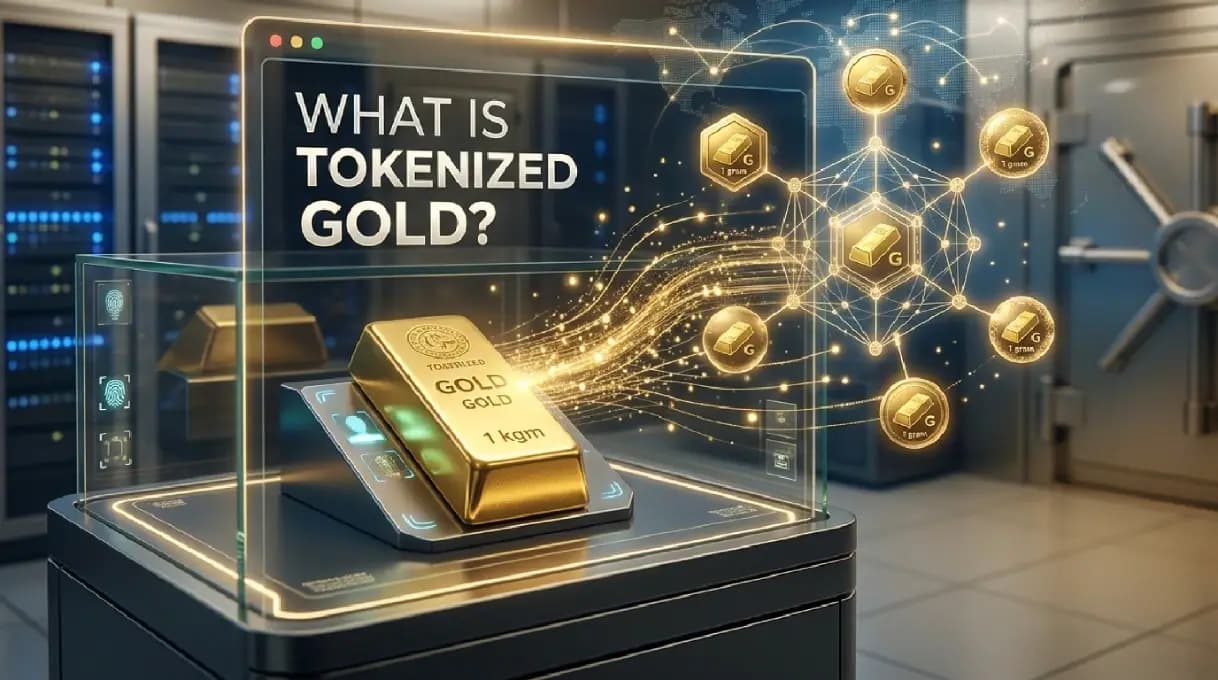
Quick answer: Tokenized gold is a digital token on a blockchain that gives you direct legal ownership of physical gold sitting in a professional vault. When you buy one token, you own a specific, weighed quantity of real metal, not a share in a fund, not a futures contract, not a promise. The token is your proof of ownership. It lives in your wallet, trades around the clock, and can be redeemed for the actual gold if you ever want it.