Gold Overtakes US Treasuries: What It Means for Tokenized Gold?

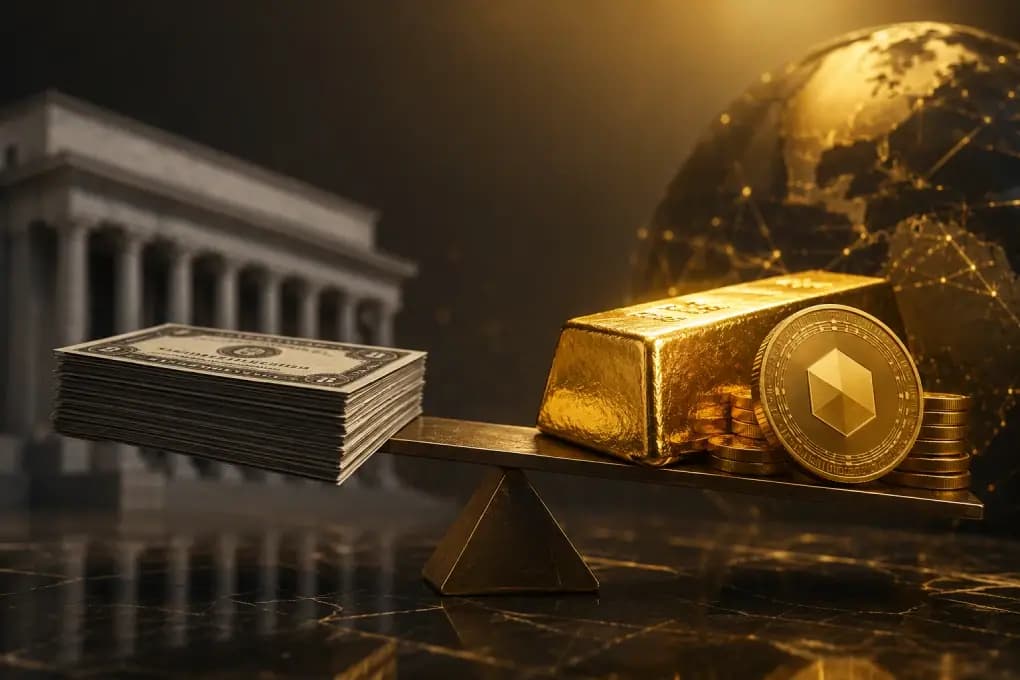
Central Banks Finally Admitted What Gold Already Knew!
The ECB just confirmed that gold has overtaken US Treasuries as the world's number-one reserve asset. Every financial outlet in the world is running that number. Here's the story they're not telling you. There is a number buried in last week's European Central Bank report that every finance journalist pulled out and led with: gold now makes up 27% of global central bank reserves, overtaking US Treasuries, which sit at 22% for the first time since 1996.
That number is real. The ECB signed it. Christine Lagarde wrote the foreword. It is, by any measure, a historic realignment of the global monetary order.
But here's what all those Reuters dispatches, Bloomberg terminals, and Forbes analyses missed, or at least didn't sit with long enough. The story isn't really about central banks. Central banks are the punchline. The story is about the rest of us.
The Irony Nobody Is Writing About
Let's put the central bank data in plain language. Governments, from China to Poland to Brazil, have spent the last four years quietly, methodically, and very expensively converting their dollar-denominated paper into physical gold bars. They did it because they watched what happened to Russia's reserves in 2022 and drew the rational conclusion: when political winds change, a Treasury bond can be frozen. A gold bar cannot.
Central banks now hold more than 36,000 tonnes of the stuff. Getting close to Bretton Woods levels, when the entire global monetary system was literally pegged to gold.
So the world's most sophisticated institutional investors, the ones with research departments, risk committees, and PhD economists, have decided that, in a world of geopolitical fragmentation and weaponized finance, gold is the answer.
Fine. Great. Smart.
Now ask yourself: who has always known this? Who has been telling their children this for generations? Who stores wealth in gold jewelry because access to formal banking has historically been uncertain? Who gives gold at weddings not as a cultural tradition but as a deeply practical hedge against the instability of whatever currency happens to be circulating that decade?
The Gulf. South Asia. The MENA region. The same communities that European and American financial institutions spent decades treating as emerging markets, a phrase that always meant: not quite ready for real finance.
Here's the irony nobody is writing: the people who understood gold most intuitively, culturally, and historically are now watching the world's central banks arrive, very loudly, very expensively, at the same conclusion. And many of them still can't access gold efficiently at today's price.
Central banks just validated something that families in Dubai, Karachi, and Cairo have known for generations. Gold isn't an alternative asset. It's the original one.
The Access Problem That $5,000 Gold Made Worse
When gold was trading at $1,800 per ounce just three years ago, the entry barrier was manageable. Uncomfortable for many, but manageable. You could buy a partial ETF unit. You could buy a small coin. The math worked at a human scale.
Gold closed January 2026 above $5,000 an ounce. Its all-time high this year touched $5,589. J.P. Morgan has a year-end target of $6,300. Deutsche Bank: $6,000. These are not fringe forecasts from gold bugs. These are the largest banks in the world, saying this out loud, in client notes.
At $5,000 an ounce, a single troy ounce of gold costs more than most monthly salaries in the countries where gold-as-savings has the deepest cultural roots. The people who most should be benefiting from gold's historic run are being priced out of the unit of account.
Traditional gold ETFs give you exposure. But you hold a fund share, not gold. You hold something that tracks a number you cannot redeem, which exists entirely within the financial system you were trying to hedge against. And you pay for the privilege in management fees.
Physical gold? At $5,000 an ounce, you're either going to a vault in Zurich or you're not going at all. Storage, insurance, transport, counterparty verification, and the infrastructure of physical gold ownership were built by institutions for institutions.
What's missing is embarrassingly obvious in retrospect: a way to own a gram of real, allocated, verified gold the way you might top up a phone. A fraction. A sliver. Something denominated at a human scale, in a digital format, with the settlement speed and borderless reach of a blockchain, and the regulatory credibility to mean something.
What the Market Data Says About Where Demand Is Going
The numbers from the tokenized gold sector in 2026 are not subtle. Spot trading volume hit $90.7 billion in Q1 alone, more than the entire 2025 full year. The total tokenized commodity market cap has grown by 256% in 15 months. Gold-backed tokens drove nearly 89% of that expansion.
What's driving it? Partly, gold's price appreciation doubled from January 2025 to March 2026. Partly institutional adoption, prime brokers are now offering tokenized gold to professional clients. Partly DeFi integration, where gold tokens are increasingly used as collateral in lending protocols, so holders can stay long gold while accessing liquidity.
But the less-discussed driver is geographic. The largest single buyer of gold in 2025 wasn't a central bank. It was Tether, a stablecoin company, deeply embedded in the crypto markets of emerging economies across Asia, the Gulf, Latin America, and Africa. Its customers are not pension funds. They are people who distrust their local currency and want a harder asset. They found a digital path to gold before most traditional financial institutions offered one. That is the market signal worth paying attention to. It is not that tokenized gold is interesting to crypto traders in New York. It is that Digital gold is becoming the practical savings vehicle of choice for people in economies where the alternative is a weakening fiat currency and a banking system they don't fully trust.
The largest single gold buyer in 2025 wasn't China or India. It was Tether - a company whose entire customer base lives in the exact markets traditional finance has underserved for decades.
Why the Gulf Market Is Different, And Why It Matters More Now
There's a reason Dubai has become one of the world's most consequential financial hubs in the last decade. It sits at the intersection of East and West capital flows; it has a regulatory infrastructure that moves faster than most Western counterparts; and it serves a population and diaspora with both cultural familiarity with gold and the digital infrastructure to access a new version of it.
VARA, the Virtual Assets Regulatory Authority, is not a sandbox. It is a proper licensing framework. When a platform operates under VARA's rules, it has met requirements that most crypto projects never even attempt to meet: capital requirements, custody standards, AML compliance, and regular audits. For institutional counterparties, for family offices, for sovereign wealth fund managers evaluating digital gold exposure, that matters enormously.
Then there's the Islamic finance dimension, which almost no Western financial journalist covers seriously. The global Islamic finance market is estimated at over $3.5 trillion in assets. The underlying principle that financial instruments must be backed by real, tangible assets is not an ideological quirk. In the current macro environment, it is arguably the most rational framework for thinking about what money should be.
A Shariah-compliant, gram-denominated, VARA-regulated tokenized gold platform is not a niche product for a niche market. It is potentially one of the most precisely positioned financial products for the moment we are actually in.
The Part the ECB Report Didn't Say
The ECB's June 2026 report on the international role of the euro is a remarkable document. It confirms the structural shift toward gold with the kind of institutional weight that moves markets and changes policy conversations. It notes, almost matter-of-factly, that central banks hold more gold than at any time since Bretton Woods.
What it doesn't say what institutional reports never say is what this means for the person in Karachi trying to save for their child's education. Or the migrant worker in the Gulf sending money home and watching it lose purchasing power the moment it crosses the border. Or the small business owner in Cairo holding cash reserves and watching the local currency depreciate faster than the bank account earns interest.
For those people, the ECB's report is not a macro data point. It's a confirmation of something they already knew at a gut level: that the system of dollar-denominated assets they were told to trust has been quietly losing the confidence of the very institutions that built it.
And the response to that is not to buy a gold ETF listed in New York, denominated in dollars, operated by a fund manager in Connecticut. The response is to own a gram of gold, actual gold, sitting in a vault, audited and allocated in a digital format that moves at the speed of a WhatsApp message.
At $5,000 an ounce, gold has never been more valuable or more inaccessible. The solution isn't complicated: denominate it differently, regulate it properly, and build it where the demand actually is.
What Changes Now
The ECB data shifts something important beyond just market sentiment. It gives institutional legitimacy to a claim that tokenized gold advocates have been making for years: that gold is not a peripheral, speculative, alternative-asset-class curiosity. It is, once again, a cornerstone of how the world stores value.
That shift has consequences. Regulatory bodies in the UAE, Singapore, and across the EU are now operating in an environment where the world's most prestigious central bank has endorsed gold's primacy in reserve management. The political will to build proper regulatory frameworks for tokenized gold is accelerating, not stalling.
Asset managers, who have spent five years managing token allocations as experimental edge-of-portfolio positions, are now being asked by clients institutional clients to treat gold exposure seriously. Some of them will reach for ETFs. The more sophisticated ones will reach for tokenized products that offer the additional properties ETFs cannot: programmability, 24/7 settlement, DeFi collateral utility, and direct redeemability against physical metal.
The market has already voted. Q1 2026 tokenized gold trading volume of $90.7 billion was not a blip. It was a structural re-rating of a product category that happens to perfectly fit the moment.
The central banks got there eventually. The question now is whether the infrastructure will exist to bring the rest of the world with them on their terms, in their currencies, at a scale they can actually afford.
A note on perspective
This piece is written by GoldOn, a VARA-licensed, gram-denominated, Shariah-compliant tokenized gold platform. We have an obvious stake in the argument above. We are also convinced that having a stake in an argument does not make the argument wrong. We'd encourage you to check the data, read the ECB report, and form your own view.
Sources
- European Central Bank-International Role of the Euro Report, June 2026
- World Gold Council-Official Sector Gold Demand 2025 Full Year
- CoinGecko-Tokenized Real-World Assets Q1 2026 Report
- com -Gold Overtakes US Treasuries in Global Reserve Shift: ECB
- CNBC- Why Gold Hasn't Moved Since the Iran Conflict
- P. Morgan-Gold Price Target Note, March 2026
- Motley Fool-Gold Just Passed $5,000 an Ounce. Should You Invest?'
- CryptoTimes-Tokenized Gold Trading Hits Record $90.7B in 2026'
 Toofan Shaterloo
Building tokenised gold infrastructure for a multipolar world. Board: @HectocornGroup. Prev: Netcore, Dengage. Operator → $300M–$1B. 1x exit. Top 100 UK Tech Influencer. Gold is the hedge.
Related posts
All posts
Toofan ShaterlooMay 28, 2026
How to Invest in Gold?
Investing in gold in 2026 offers diverse methods to hedge against inflation and protect wealth, ranging from traditional physical bars to modern, liquid tokenized gold and ETFs. Because gold provides stability rather than high growth, it is best used as a portfolio diversifier, typically 5% to 15% of your total assets, to reduce risk during economic uncertainty. Choosing the right method depends on your budget and custody preferences, but always prioritize regulated platforms with audited, transparent gold reserves to ensure security.
Toofan ShaterlooJun 1, 2026
Digital Gold Investment Guide
Tokenized gold is a major new development in gold investment since the launch of ETFs in 2003. It allows people to own physical gold through blockchain technology, enabling quick transactions and around-the-clock access. Unlike traditional paper claims, tokenized gold offers clear proof of reserves, providing trustworthy information. This makes it an important tool for modern investors dealing with current global and currency uncertainties.
Toofan ShaterlooJun 3, 2026
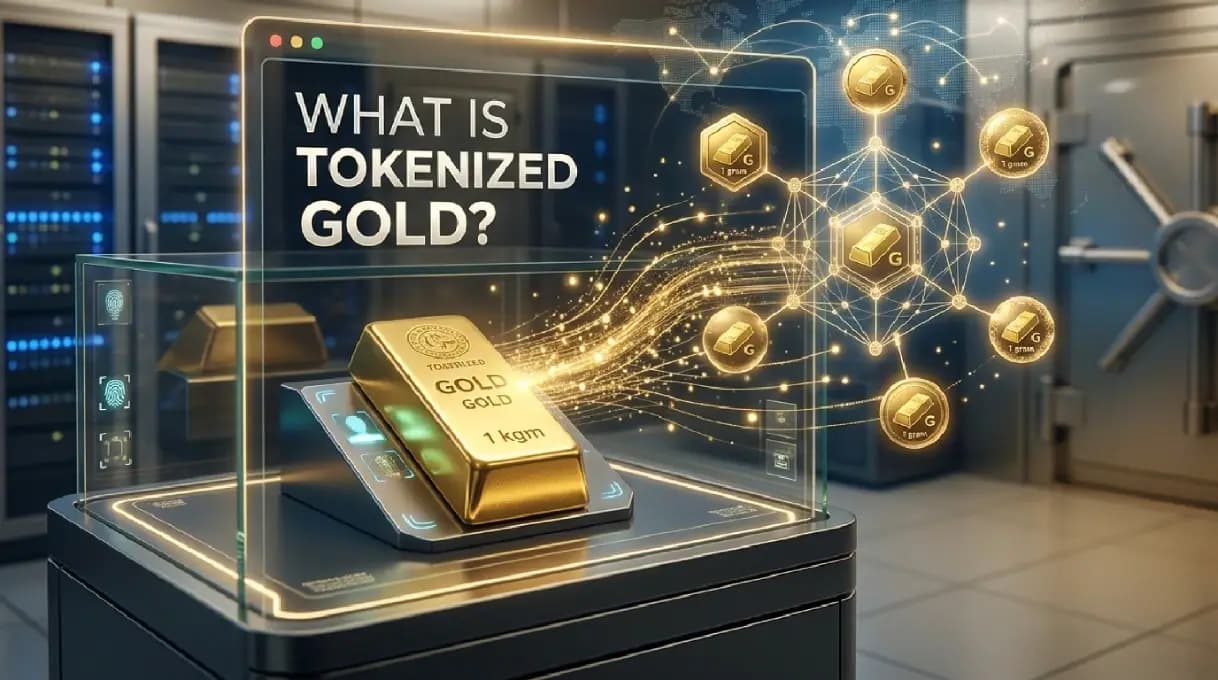
What Is Tokenized Gold?
Quick answer: Tokenized gold is a digital token on a blockchain that gives you direct legal ownership of physical gold sitting in a professional vault. When you buy one token, you own a specific, weighed quantity of real metal, not a share in a fund, not a futures contract, not a promise. The token is your proof of ownership. It lives in your wallet, trades around the clock, and can be redeemed for the actual gold if you ever want it.